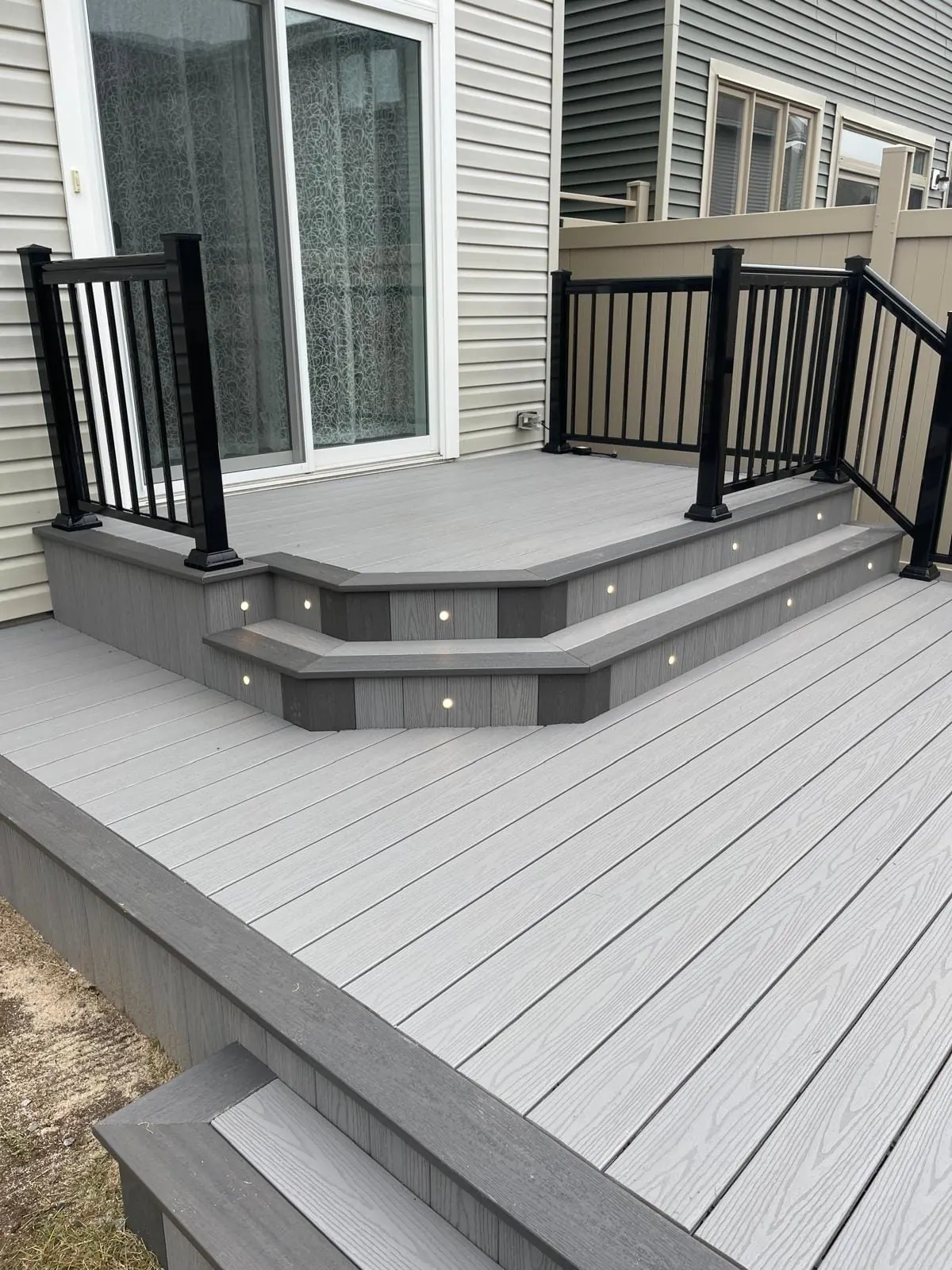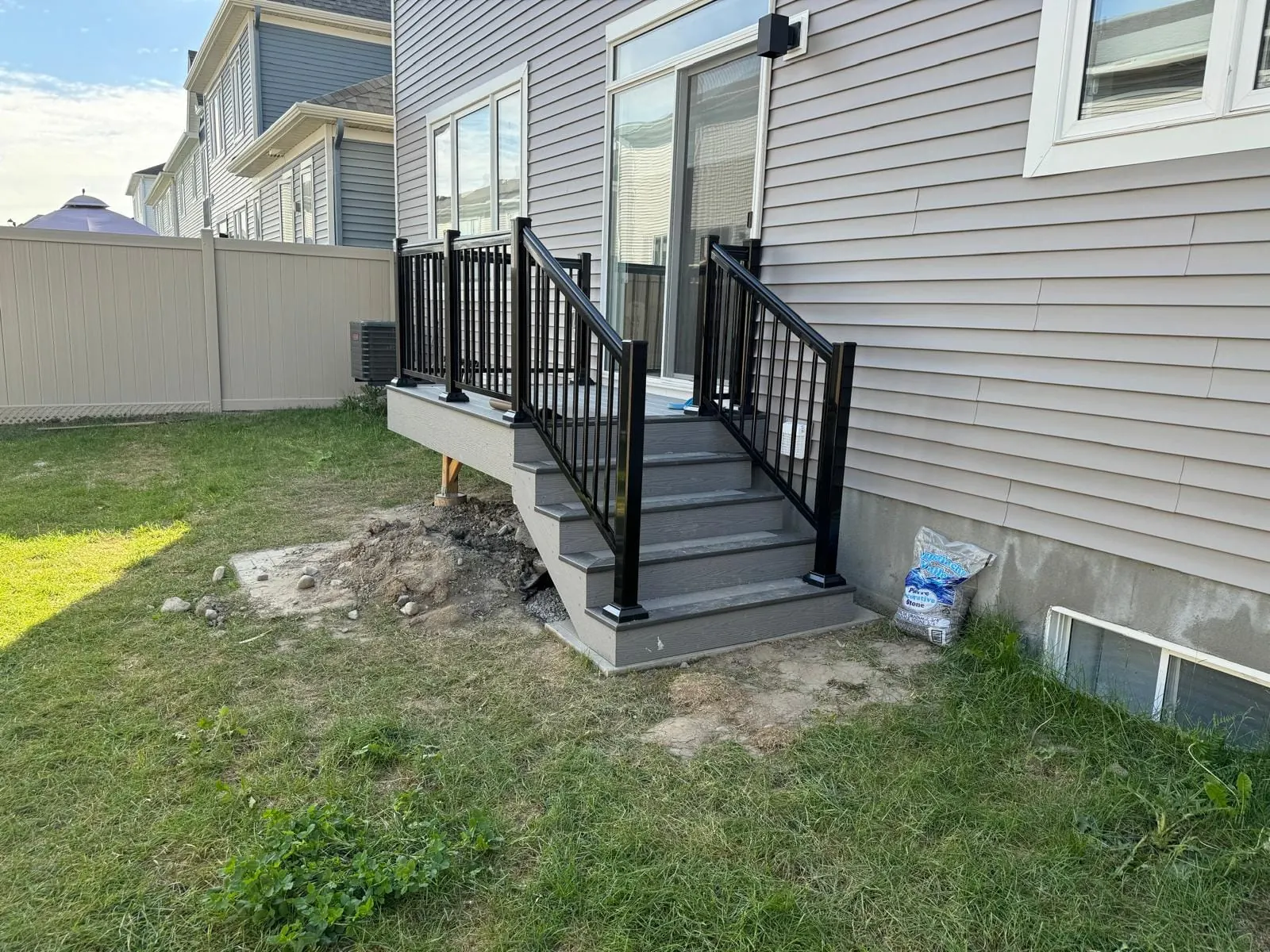
Composite and pressure-treated wood are the two most common decking materials Ottawa homeowners choose between, and the decision usually comes down to one question: pay more now, or pay less now and more later? Here's a straightforward cost comparison to help you decide.
For the full picture on planning an Ottawa deck build — including permits and design trends — see our complete deck design guide, or read about when a deck needs a permit before you budget.
Upfront Cost Comparison
Pressure-treated wood has the lower material and labour cost of the two. Rough 2026 installed price ranges by deck size:
- Small pressure-treated deck (12×12): $8,000–$14,000
- Mid-size composite deck (16×16): $18,000–$32,000
- Large multi-level composite deck: $35,000–$65,000+
A comparably sized pressure-treated deck typically costs meaningfully less than the same footprint in composite, since composite boards themselves carry a higher material cost than dimensional lumber.
Total Cost of Ownership Over 20 Years
The upfront numbers only tell half the story. Pressure-treated wood requires a quality penetrating oil stain or water repellent applied every 2–3 years for the life of the deck — skip a cycle in Ottawa's climate and you'll see cracking and splitting accelerate. Over 15–20 years, that's roughly six to eight maintenance cycles, each with material and either labour cost or your own weekend time.
Composite decking's maintenance is close to zero: an annual wash with soap and water, occasionally a composite-specific cleaner for stubborn stains. Premium composite brands carry warranties of 25–30 years, versus a realistic 15–20 year lifespan for a well-maintained pressure-treated deck. When you add up the recurring staining cost against composite's higher purchase price, the total cost of ownership gap between the two materials narrows substantially — and can favour composite outright over a long enough horizon.
Durability in Ottawa's Climate
Ottawa's freeze-thaw cycles and humid summers are hard on any decking material, but they expose pressure-treated wood's weaknesses faster. Even with proper maintenance, wood boards eventually crack, splinter, and grey. Composite boards, engineered to resist moisture absorption and colour fade, hold their appearance and structural integrity far longer under the same conditions — that resistance is the core reason composite has become the most popular decking choice for Ottawa builds.
Look and Feel
Pressure-treated wood has a natural, classic look that some homeowners prefer, and it can be sanded and re-stained to a different tone if your taste changes. Modern composite boards mimic wood grain convincingly and are available in an expanding range of colours — dark charcoals and espresso tones are especially popular in Ottawa right now — but the colour is fixed for the life of the board rather than refinishable.
Resale Value
A well-built deck in either material adds value at resale, but a composite deck's consistent, low-maintenance appearance tends to present better to buyers years down the road than a pressure-treated deck that's overdue for staining. If you're planning to sell within the deck's lifetime, factor that presentation difference into the decision, not just the installation invoice.
Which One Should You Choose?
- Want the lowest possible upfront cost and don't mind a maintenance routine? Choose pressure-treated wood.
- Want to spend more now and effectively nothing on maintenance for 25+ years? Choose composite.
- Planning to sell within a few years? Composite's low-upkeep presentation is worth the premium.
- Building on a tight budget with a long-term plan to upgrade later? Pressure-treated is a legitimate starting point.
AMA United builds both composite and pressure-treated decks across Ottawa, including Barrhaven and Gloucester, and we'll walk you through the real numbers for your specific project rather than steering you toward one material by default. See our full deck building services for material options and photos of recent builds.
What Doesn't Change Between the Two
It's worth being clear about what the material choice does not affect, since some of it gets conflated with the decking decision:
- Structural framing and footings are pressure-treated lumber either way, sized and installed to the same code requirements regardless of which decking surface goes on top.
- Permit requirements depend on height above grade and attachment to the house, not on whether the surface is composite or wood.
- Workmanship warranty — AMA United backs the installation itself with a 2-year workmanship warranty on every deck build, composite or pressure-treated. Composite boards additionally carry their own manufacturer warranty of 25–30 years, separate from the installation warranty.
A Practical Way to Decide
If you're still on the fence, ask yourself one honest question: are you the kind of homeowner who will actually apply a fresh coat of sealant every 2–3 years without it becoming a recurring chore you dread? If yes, pressure-treated wood can deliver excellent value over its lifespan. If you know realistically that maintenance will slip, composite's higher upfront cost buys you out of that risk entirely — and the total cost of ownership calculation tends to favour composite once a few missed maintenance cycles are factored in.
Not Sure Which Decking Material Fits Your Budget?
AMA United Company builds custom decks in both composite and pressure-treated wood across Ottawa. Free on-site design consultation, transparent pricing, and a 2-year workmanship warranty on every build.
Book a Free Design Consultation