Once you've picked a material and gotten a quote, the next question is almost always "how long will this actually take?" A fence installation moves faster than most homeowners expect — but the timeline has specific stages, and understanding them helps you plan around the work instead of being surprised by it.
This walks through what a typical Ottawa fence installation looks like from first call to final walkthrough. For material and cost details, see our fence cost guide and complete residential fencing guide.
Before Installation Begins
The timeline actually starts well before anyone shows up with a post-hole digger:
- On-site consultation and quote: A contractor visits your property, measures, discusses material and style, and provides a detailed written quote.
- Material selection and ordering: Once you approve the quote, materials are ordered. PVC and specialty hybrid boards can have longer lead times than stock chain link or standard lumber, so material choice affects your start date.
- Utility locate: A locate is arranged before any digging begins, to mark buried utility lines and avoid damaging them.
- Bylaw and permit check: Your contractor confirms whether your project needs a permit — most standard backyard fences under 2 metres don't — before scheduling the install date.
Day One: Layout, Digging, and Setting Posts
On the first day of physical work, the crew lays out the exact fence line, marking post locations at the correct spacing for your chosen material and height. Post holes are then dug — in Ottawa, posts are typically set below the frost line, roughly 4 feet deep, so the fence doesn't heave with seasonal ground movement. Posts go in and are set in concrete, which is the anchor for everything that follows.
Why Concrete Needs Time to Cure
This is the step that surprises people: the crew can't attach rails and boards to a freshly set post right away. Concrete needs time to cure and reach enough strength to hold the post rigid under load — rushing this step risks a leaning fence down the road. This is why most residential installs span two visits rather than being finished in one continuous day, even though the total labour time is modest.
Final Day: Rails, Boards, and Gates
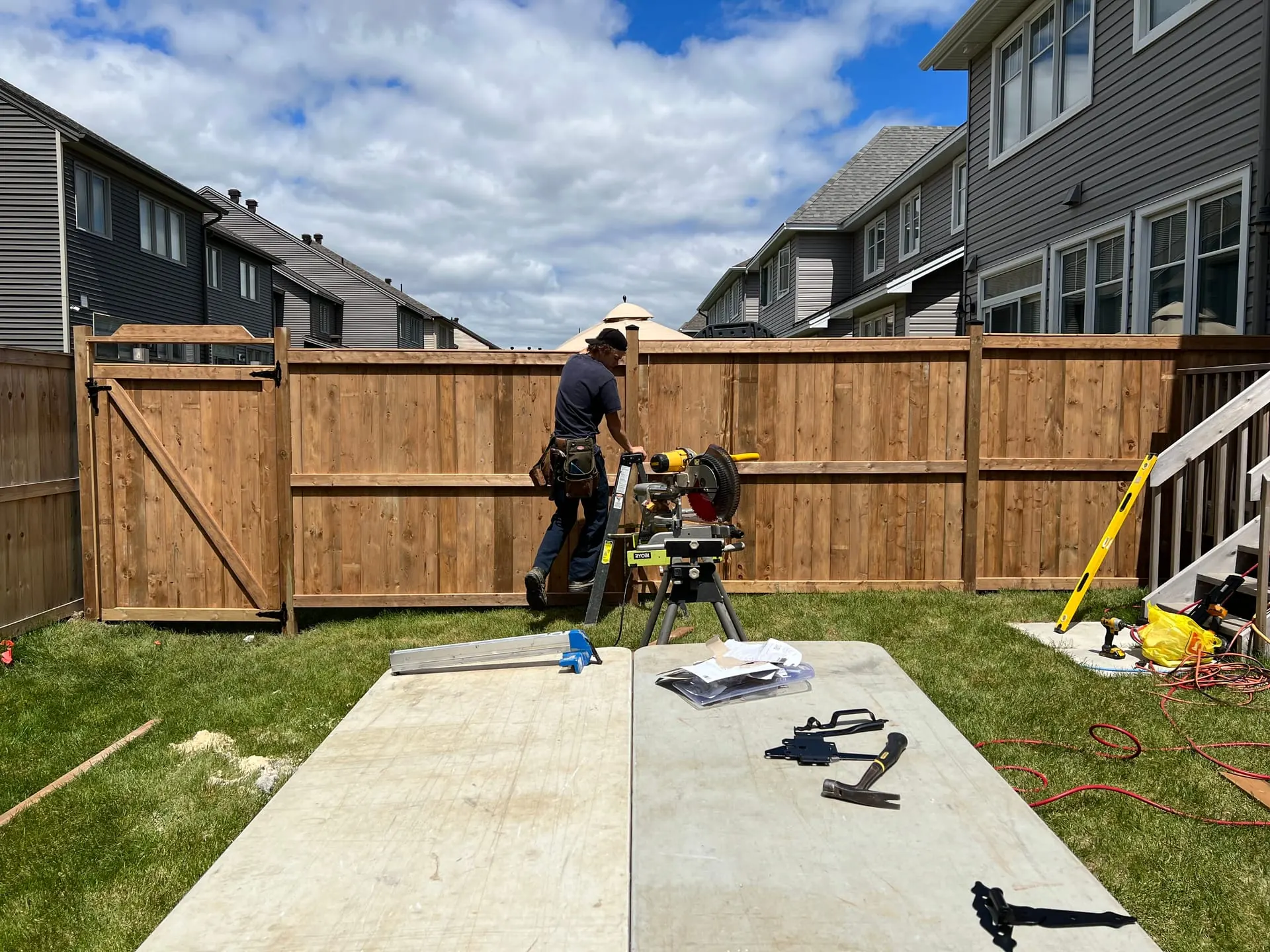
Once the concrete has cured, the crew returns to attach rails, then boards or panels, and finally gates with hardware. This stage moves quickly compared to post-setting, since it's largely assembly rather than excavation. Gates are hung, latches and hinges are adjusted for smooth operation, and the site is cleaned up — excess soil, offcuts, and packaging removed.
For most standard residential fences, this two-visit process wraps up within 1–2 days of active work, spread across the days needed for the concrete to cure in between.
What Can Extend the Timeline
- Property size and complexity: A long perimeter, many corners, or multiple gates adds labour time proportionally.
- Sloped or rocky terrain: Digging is slower and posts may need extra adjustment on uneven or rocky ground.
- Old fence removal: Demolishing and hauling away an existing fence adds a step before the new install can start.
- Weather: Heavy rain can delay digging and concrete work; frozen ground in deep winter makes standard post-hole digging much harder and can push installs to a warmer window.
- Material lead times: Specialty colours or hybrid boards on backorder can push the start date out even after your quote is approved.
Final Walkthrough and Warranty
Once the install is complete, a reputable contractor walks the finished fence with you — checking gate operation, confirming the line is straight and level, and answering any questions before calling the job done. AMA United backs every fence installation with a 2-year workmanship warranty, so if anything settles or needs adjustment after the fact, we come back and fix it.
We install fencing across the Ottawa region, including Gloucester, Kanata, and Greely, and give every customer a realistic, honest timeline before work begins — not an optimistic estimate that slips. See our full residential fencing services for material options and recent installs.
How Seasonal Timing Affects Scheduling
Ottawa's fencing season has a real shape to it, and understanding it helps you plan realistically:
- Spring: The busiest booking season, as homeowners plan backyard projects for the warmer months ahead. Ground conditions are workable once the frost is fully out, but expect fuller schedules.
- Summer: Ideal digging and curing conditions, though also a high-demand period — book ahead if you have a specific timeframe in mind.
- Fall: Excellent digging conditions and typically less demand than spring or summer, often the best window for a faster start date.
- Winter: Frozen ground makes standard post-hole digging significantly harder or impractical for much of the season. Many installs pause until the ground thaws, though this varies year to year with how severe the winter is.
What to Do to Keep Your Project on Schedule
A few things on the homeowner's side genuinely help keep an installation moving smoothly:
- Clear the fence line of furniture, planters, and stored items before the crew arrives.
- Confirm gate swing direction and any access needs during the consultation, not on installation day.
- Be reachable during the install window in case the crew has a quick question about layout or a boundary detail.
- Give pets a heads-up plan — an open yard with active digging isn't the place for a dog to be loose during the work.
Ready to Schedule Your Fence Installation?
AMA United Company installs fencing across Ottawa with a clear, realistic timeline confirmed before work begins. Free on-site consultation, transparent pricing, and a 2-year workmanship warranty on every project.
Get a Free Fence Quote